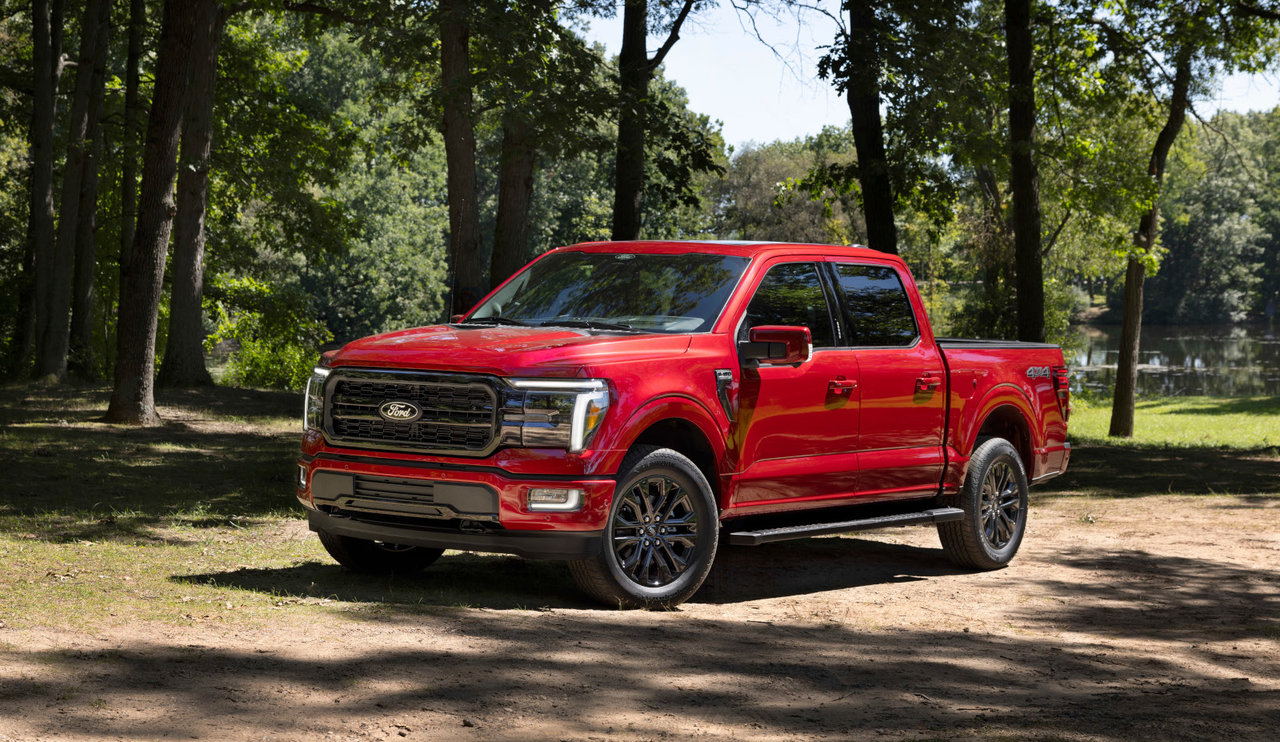
Summer in British Columbia means loaded trailers, packed marinas, and long highway stretches with a boat riding behind the truck. Picking the right 2026 Ford F-150 configuration for that job comes down to matching engine, cab, and payload to the trailer you actually own. This guide breaks down the tow ratings, payload numbers, and trailer tech that make that decision easier.
Why Configuration Matters More Than The Sticker Number
A single F-150 tow rating rarely tells the whole story. The maximum available tow rating, 13,500 lbs (6,123.5 kg), is reached on an XLT SuperCrew 4x4 with a 6.5-foot box, the Tow/Haul Package, and the Max Tow Axle upgrade, which adds an integrated trailer brake controller and a 3.55 or 3.73 e-lock rear axle.
Change the cab, engine, or axle, and the number moves. For anyone hauling a boat and trailer regularly, the gap between the advertised peak and the number tied to a specific build is the first thing worth sorting out before comparing trims.
Engine Options And Tow Ratings
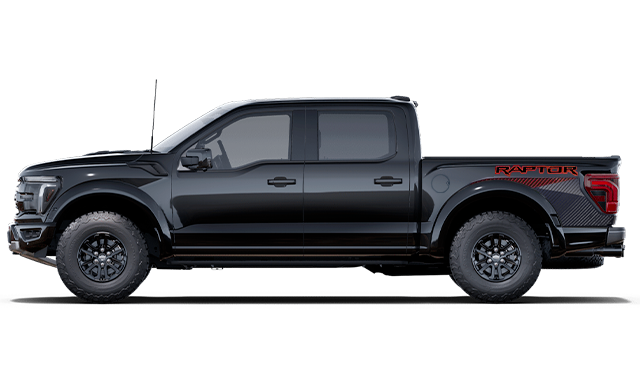
The 2026 F-150 lineup covers six engines, each with its own tow and payload ceiling. The 2.7L EcoBoost V6 makes 325 hp and 400 lb-ft, while the 3.5L EcoBoost V6 steps up to 400 hp and 500 lb-ft. The 3.5L PowerBoost Full Hybrid V6 adds low-end torque, and the 5.2L supercharged V8 in the Raptor R tops the range at 720 hp.
|
Engine
|
Horsepower
|
Torque
|
Max Towing
|
Max Payload
|
|
2.7L EcoBoost V6
|
325 hp
|
400 lb-ft
|
8,400 lbs (3,810.2 kg)
|
1,775 lbs (805.1 kg)
|
|
3.5L EcoBoost V6
|
400 hp
|
500 lb-ft
|
13,500 lbs (6,123.5 kg)
|
2,440 lbs (1,106.8 kg)
|
|
5.0L Ti-VCT V8
|
400 hp
|
410 lb-ft
|
12,800 lbs (5,806.0 kg)
|
2,235 lbs (1,013.8 kg)
|
|
3.5L PowerBoost Full Hybrid V6
|
420 hp
|
570 lb-ft
|
11,600 lbs (5,261.7 kg)
|
1,740 lbs (789.2 kg)
|
|
High-Output 3.5L EcoBoost V6 (Raptor)
|
450 hp
|
510 lb-ft
|
8,200 lbs (3,719.5 kg)
|
1,400 lbs (635.0 kg)
|
|
5.2L Supercharged V8 (Raptor R)
|
720 hp
|
640 lb-ft
|
8,700 lbs (3,946.3 kg)
|
1,400 lbs (635.0 kg)
|
The gap between the 2.7L and 3.5L EcoBoost is the one most boat owners feel first: an extra 5,100 lbs (2,313.3 kg) of towing room and 665 lbs (301.7 kg) more payload for a mid-size or larger boat and trailer. The PowerBoost hybrid sits between the two on towing but leads on torque at 570 lb-ft, useful for pulling away from a steep launch ramp.
Trailer Tech For Hitching And Launch Ramps
Docking a trailer at a busy launch ramp goes easier with help. Pro Trailer Hitch Assist is an available feature that steers, accelerates, and brakes the truck into position, turning hitching into a one-person job. Pro Trailer Backup Assist turns reversing into a twist of a dash-mounted knob, and Dynamic Hitch Assist adds an available on-screen guide that tracks the truck’s path in reverse.
The Smart Trailer Tow Connector watches the trailer itself, flagging a burnt-out brake or turn signal lamp and monitoring trailer battery health through the tow activity screen. Ford Co-Pilot360 technology adds Blind Spot Information System coverage that extends to the trailer, useful for highway lane changes with a boat in tow.
Payload, Cab, And Room For Gear
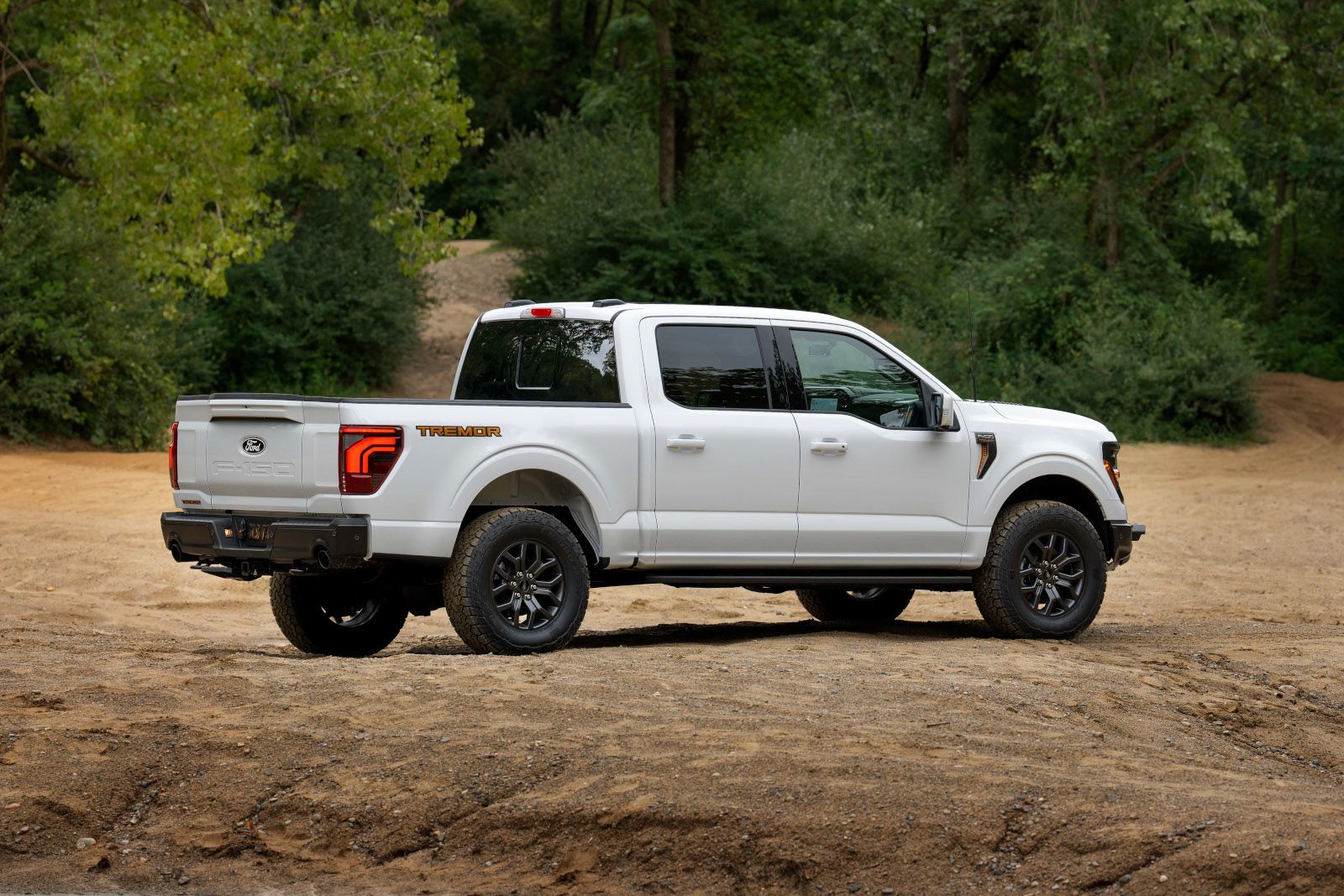
Payload budgets fill up fast with passengers, coolers, life jackets, and hitch hardware before the trailer’s tongue weight even factors in. Maximum payload, properly configured, scales with cab:
- Regular Cab: 2,440 lbs (1,106.8 kg)
- SuperCab: 2,155 lbs (977.5 kg)
- SuperCrew: 2,235 lbs (1,013.8 kg)
Regular Cab seats up to 3, while SuperCab and SuperCrew both seat up to 6, a real difference for families splitting a boat trip into two vehicles versus bringing the whole crew in one truck. Interior cargo volume with the rear seats folded ranges from 1,494.8 L up to 2,191 L depending on cab, room for wet gear and safety equipment that would otherwise ride in the box.
Front-seat space includes 1,115 mm of legroom, 1,037 mm of headroom, and 1,695 mm of shoulder room, enough for adults in wet layers after a morning on the water.
Ground Clearance And Suspension For Ramps And Gravel Access
Launch ramps and gravel forestry roads are not always paved or level. The F-150’s independent double-wishbone front suspension with coil-over shocks, paired with a rear leaf-spring solid axle, is built to handle uneven surfaces while carrying tongue weight. Ground clearance sits at 210.8 mm.
- Approach angle: 20.7 degrees
- Breakover angle: 20.1 degrees
- Departure angle: 23.9 degrees
Tremor adds off-road-tuned suspension, steel skid plates, and selectable drive modes for extra grip on wet boat ramps, while Raptor pairs FOX Racing Dual-Valve shocks with its 720-horsepower engine for drivers who spend as much time off pavement as on it.
Fuel Economy Tradeoffs For Frequent Towing Trips
Regular runs between home and the water add up in fuel costs, and the lineup spreads across a range. The 2.7L EcoBoost posts the best combined figure at 10.7 L/100km, with 12.0 L/100km city and 9.2 L/100km highway. The 3.5L EcoBoost trades some of that efficiency for towing headroom, at 12.0 L/100km combined, 13.4 L/100km city, and 10.2 L/100km highway.
The PowerBoost Full Hybrid V6 lands at 10.1 L/100km combined, city and highway alike, pairing strong torque with fuel numbers closer to the 2.7L than the V8 options.
Which Setup Fits Your Boating Season
A lighter aluminum or fibreglass boat on a single-axle trailer rarely pushes past the 2.7L EcoBoost’s 8,400 lbs (3,810.2 kg) rating, leaving room for the best fuel economy in the lineup. Bigger cruisers and tandem-axle trailers push toward the 3.5L EcoBoost’s 13,500 lbs (6,123.5 kg) ceiling or the PowerBoost hybrid’s 570 lb-ft for steep ramps.
Families hauling gear for a full weekend get more from SuperCrew’s cabin space and payload, while buyers splitting time between paved highways and gravel access roads get more from Tremor’s suspension. The F-150’s warranty coverage includes a 3-year, 60,000 km basic warranty and a 5-year, 100,000 km powertrain warranty, relevant for the wear that regular trailering puts on hitches, axles, and transmissions.
Choosing The Right 2026 F-150 For Your Boat
The 2026 F-150 spans engines from the 325-hp 2.7L EcoBoost to the 720-hp supercharged V8, with tow ratings from 8,200 lbs (3,719.5 kg) to 13,500 lbs (6,123.5 kg) and payloads shaped by cab choice.
Visit Coastal Ford Squamish in Squamish to compare F-150 towing configurations against your boat’s weight, passenger count, and the launch ramps you use most, and find the setup that fits your season on the water.