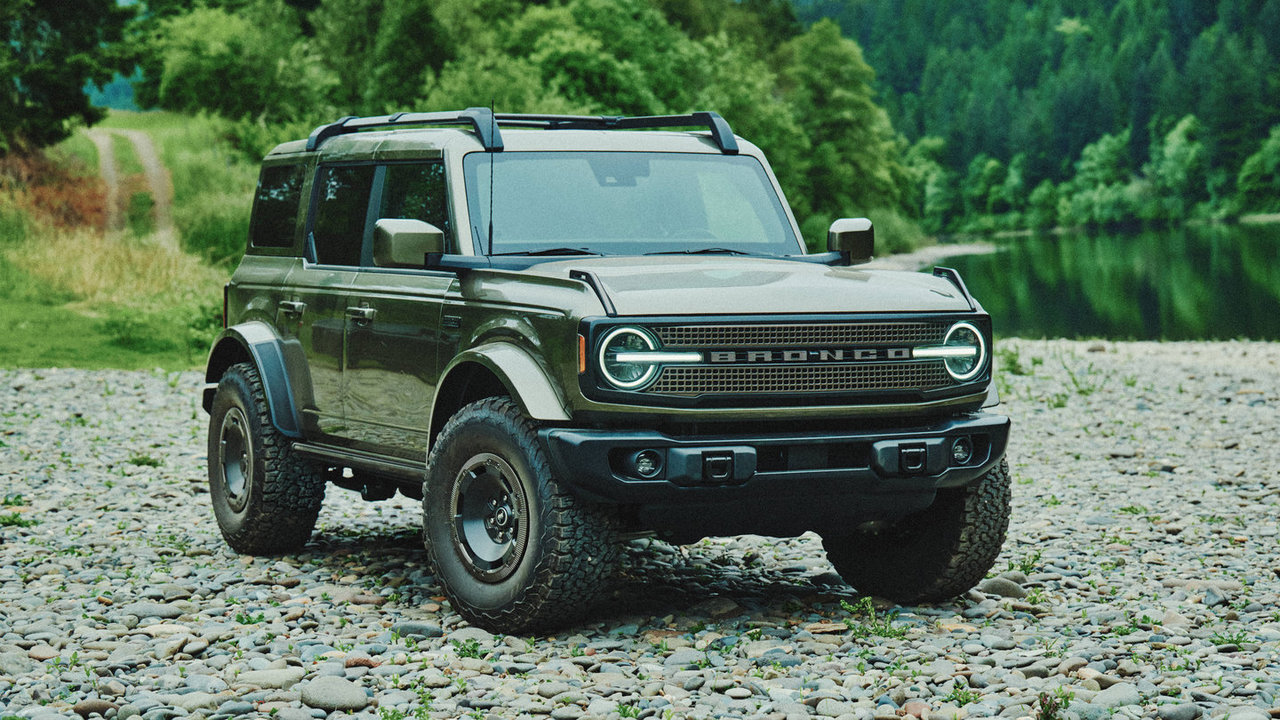
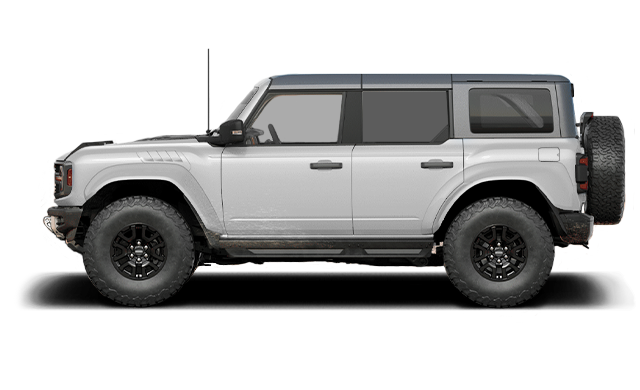
British Columbia trail shoppers cross-shop the Bronco for one reason: it has to work on gravel forest service roads and paved commutes alike. The real decision is not whether a Bronco can handle rough terrain, it is which build gets you there in the style you actually want.
The Bronco lineup runs from Base through Big Bend, Black Diamond, Outer Banks, Badlands, Wildtrak, Everglades, and Heritage, with the Raptor and the new-for-2027 Bronco Filson holding the outer edges of the range. Sasquatch is not a trim on its own; it is a package that adds serious trail hardware to several of those trims, while Filson layers comfort and standard equipment on top of the Bronco’s off-road base.
Bronco Filson and Sasquatch Side By Side
|
What You’re Comparing
|
Bronco Filson
|
Sasquatch Package
|
|
Standard engine
|
3.0L turbocharged V6
|
Paired with the host trim’s engine (2.3L I-4 or 2.7L V6)
|
|
Tires
|
35-inch, standard
|
Larger off-road tires, up to 37-inch on equipped trims
|
|
Ground clearance
|
Standard Bronco height, no Sasquatch lift
|
294 mm (2-door) / 293 mm (4-door)
|
|
Touchscreen
|
12-inch display, standard
|
Set by the host trim
|
|
Character
|
Comfort and refinement on the off-road base
|
Suspension and traction hardware for technical trails
|
Shared Off-Road Foundation
Before the differences, both builds start from the same base. Every Bronco comes with 4WD as standard, so neither Filson nor Sasquatch is choosing between two-wheel and four-wheel drive, they are choosing how that traction gets applied on the trail.
Max towing tops out at 4,500 lbs (2,041 kg) across the lineup, and Bronco’s fording depth reaches 850.9 mm. Approach, breakover, and departure angles climb as high as 47.2°, 30.8°, and 40.5° on off-road-equipped models, including Sasquatch-package Broncos, giving both packages real geometry to build from.
Cabin Comfort and Storage on the Filson
The Filson’s standard equipment list reads like the top of the Bronco range: a 3.0-litre turbocharged V6, 35-inch tires, and a 12-inch touchscreen come standard rather than options you have to chase down an order sheet. The V6 pairs with the automatic transmission, since the 7-speed manual is reserved for the 2.3L four-cylinder, giving the Filson more low-end torque for loaded gear and mixed pavement-to-gravel routes.
Inside, the washable interior and floor drains carry over from the rest of the lineup, which matters when wet gear rides along after a coastal outing. Heated seats and a heated steering wheel are available, along with rear climate control on select models, features that soften the long paved stretches between trailheads.
Sasquatch Hardware for Rock, Ruts, and Uneven Ground
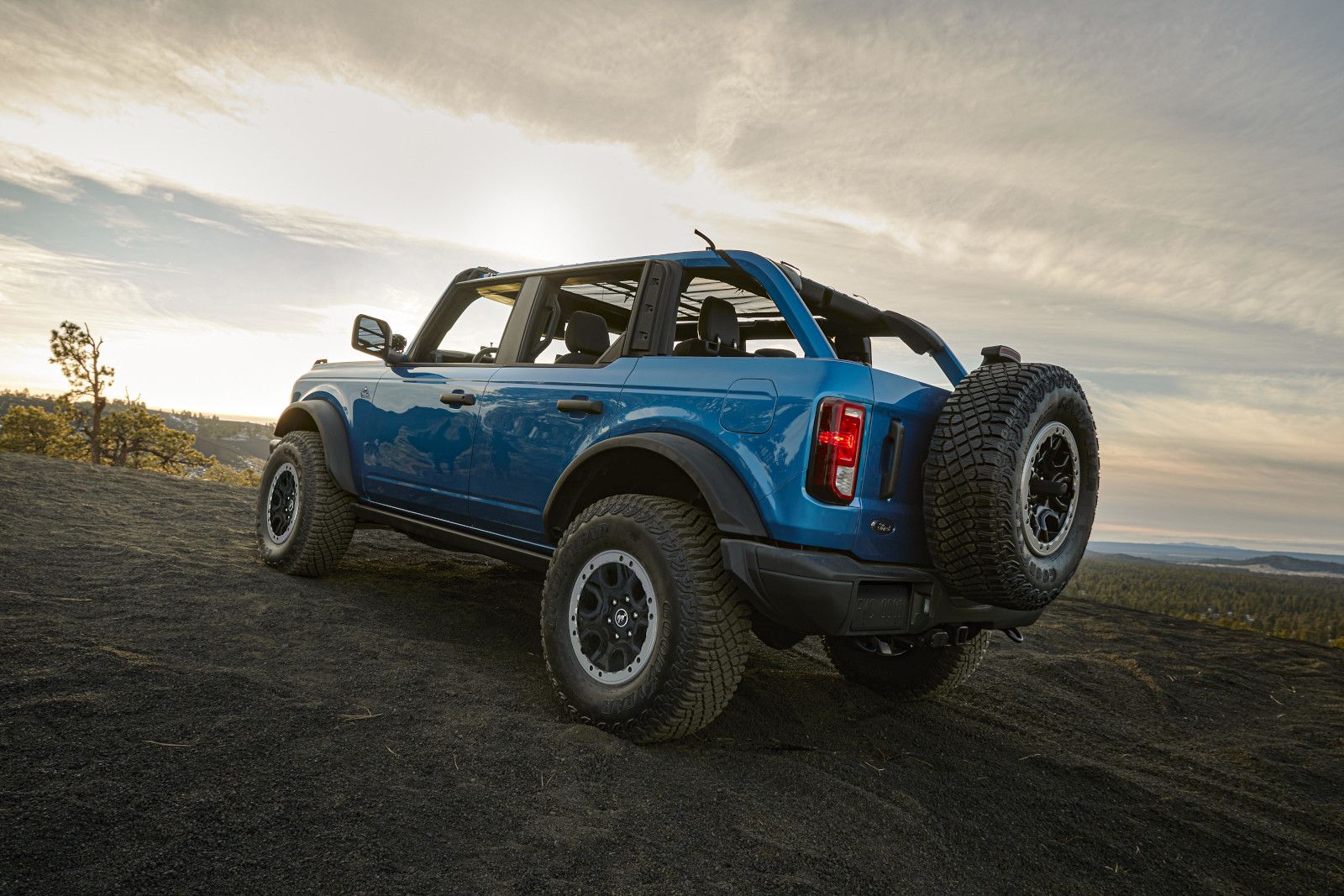
Sasquatch adds the HOSS suspension system, a stabilizer bar disconnect, and selectable drive modes such as Rock Crawl and Mud/Ruts, hardware built to keep the Bronco composed on uneven, low-traction surfaces. The suspension lift is the headline number: 294 mm on two-door models and 293 mm on four-door models, well above standard geometry.
That extra clearance, paired with the stabilizer disconnect’s added wheel articulation, is the difference between a Bronco that rides over rocks and ruts and one that picks a careful line around them.
Exterior Size and Trail Placement
Every Bronco shares the same core footprint: 4,411 mm long, 2,189 mm wide, and 1,827 mm tall, with seating for up to five. That size works on narrow forest access roads and in tight parking, since the width stays the same regardless of package.
Approach angle is the number that separates a comfortable ride to the trailhead from an anxious one at the trailhead itself. Sasquatch-equipped Broncos reach up to 47.2°, with breakover at 30.8° and departure at 40.5°, angles that matter most on steep, rutted forest service roads.
Which One Is Right for You?
For comfort-first trail users, overlanders who want a fully equipped interior, and buyers who prioritize a refined cabin over maximum articulation, the Filson’s standard V6 and equipment list make it the easier daily companion. It still carries real capability, it just does not chase the tallest ground clearance number in the lineup.
For buyers who want maximum off-road focus without extra lifestyle equipment, Sasquatch is the more direct answer. The taller ground clearance, HOSS suspension, and drive modes built for rock and ruts put hardware first, ahead of comfort features you may not use on a technical weekend route.
Both suit different styles of weekend use: the Filson favours long drives to a comfortable basecamp with gear organized and dry, while Sasquatch favours the technical stretch of forest service road that asks for extra clearance and articulation before the Filson’s standard geometry calls for a slower pace.
Choosing Your Bronco at Coastal Ford
The Bronco Filson and Sasquatch package point at two different trail habits, one built around comfort and standard equipment, the other around suspension hardware and clearance. Both start from the same 4WD platform and 4,500 lbs (2,041 kg) towing figure.
Visit Coastal Ford Squamish soon to learn more about both setups, compare the Filson’s cabin against the Sasquatch package’s trail hardware, and talk through which one matches your regular routes when it arrives later this year.