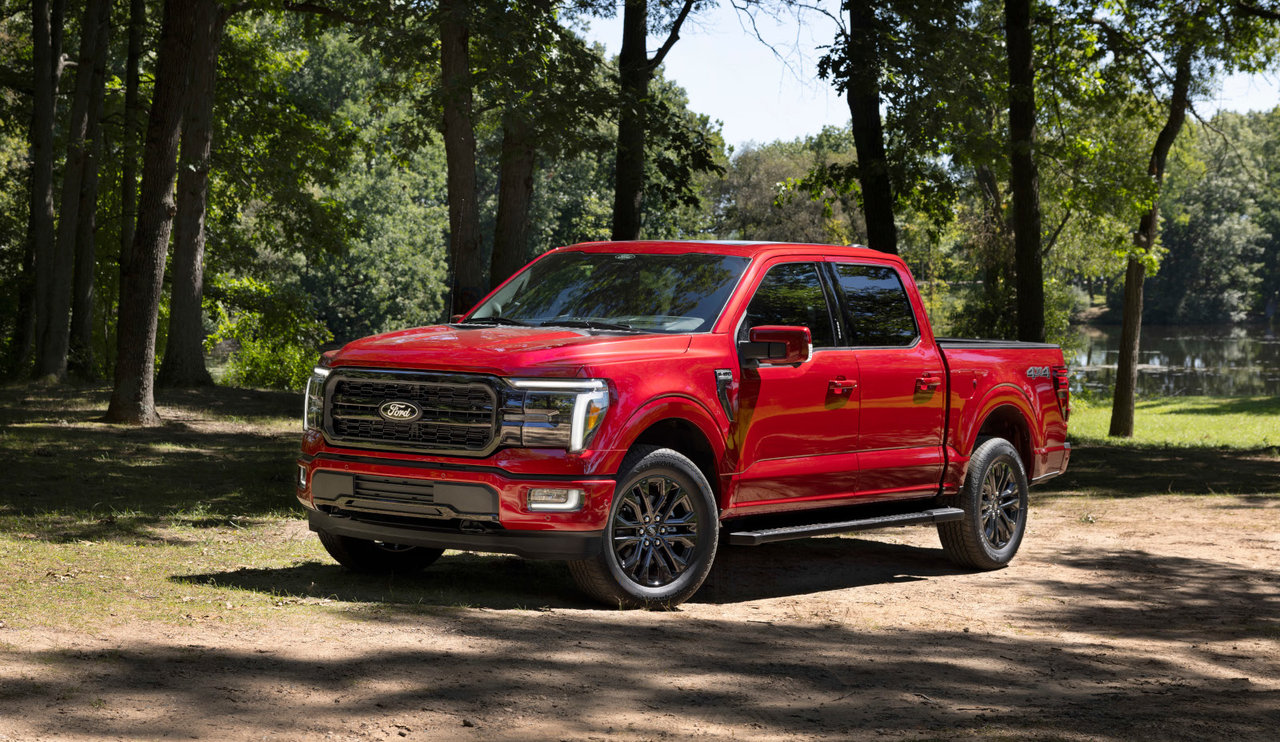
Every trip to the pump adds up when a full-size pickup is your daily driver. If you’re cross-shopping the 2026 Ford F-150 in British Columbia, the engine under the hood changes that math more than any other single choice. The PowerBoost Hybrid and the 3.5L EcoBoost V6 sit side by side on the order sheet, but they behave very differently once you’re stuck in stop-and-go traffic.
This comparison looks at both engines through one lens: what they cost to drive every day, and what they still let you do on weekends.
PowerBoost Hybrid vs. EcoBoost V6 at a Glance
|
Spec
|
PowerBoost Hybrid
|
EcoBoost V6
|
|
Combined Fuel Economy
|
10.1 L/100km
|
12.0 L/100km
|
|
City Fuel Economy
|
10.1 L/100km
|
13.4 L/100km
|
|
Highway Fuel Economy
|
10.1 L/100km
|
10.2 L/100km
|
|
Horsepower
|
420 hp
|
400 hp
|
|
Torque
|
570 lb-ft
|
500 lb-ft
|
|
Max Towing
|
11,600 lbs (5,261.7 kg)
|
13,500 lbs (6,123.5 kg)
|
|
Max Payload
|
1,740 lbs (789.3 kg)
|
2,440 lbs (1,106.8 kg)
|
|
Fuel Type
|
Regular
|
Regular
|
|
Transmission
|
10-speed automatic
|
10-speed automatic
|
Both engines are 3.5L V6s, and both run on regular unleaded fuel, so the difference in ownership cost comes down to how much of that fuel each one actually burns.
Power Delivery in Town and on the Highway
The PowerBoost Hybrid pairs its 3.5L V6 with an electric motor, and that motor’s torque arrives the instant you press the pedal. Its 570 lb-ft shows up sooner than the EcoBoost V6’s 500 lb-ft, which matters most at a stop sign or merging onto a highway on-ramp.
The EcoBoost V6 still tows more, topping out at 13,500 lbs (6,123.5 kg) against the PowerBoost’s 11,600 lbs (5,261.7 kg). But a truck used mainly for the drive to work rarely gets near either number, and the hybrid’s low-end torque covers grade climbs and merges without waiting for revs to build.
What Each Engine Actually Costs You at the Pump
The PowerBoost Hybrid holds a flat 10.1 L/100km across city, highway, and combined driving, a rare thing for a full-size truck. The EcoBoost V6 climbs to 13.4 L/100km in the city, more than 3 L/100km thirstier than the hybrid over the same stop-and-go stretch.
That gap closes on the highway; the EcoBoost V6’s 10.2 L/100km sits almost even with the PowerBoost’s 10.1 L/100km. For a commute that’s mostly open road, the two engines land close together. For a commute through traffic lights and congestion, the hybrid’s advantage grows with every kilometre.
At 12.0 L/100km combined, the EcoBoost V6 burns noticeably more fuel than the PowerBoost’s 10.1 L/100km over the same distance, which adds up to more stops at the pump across a year of daily driving.
Weekend Capability Without Losing the Savings
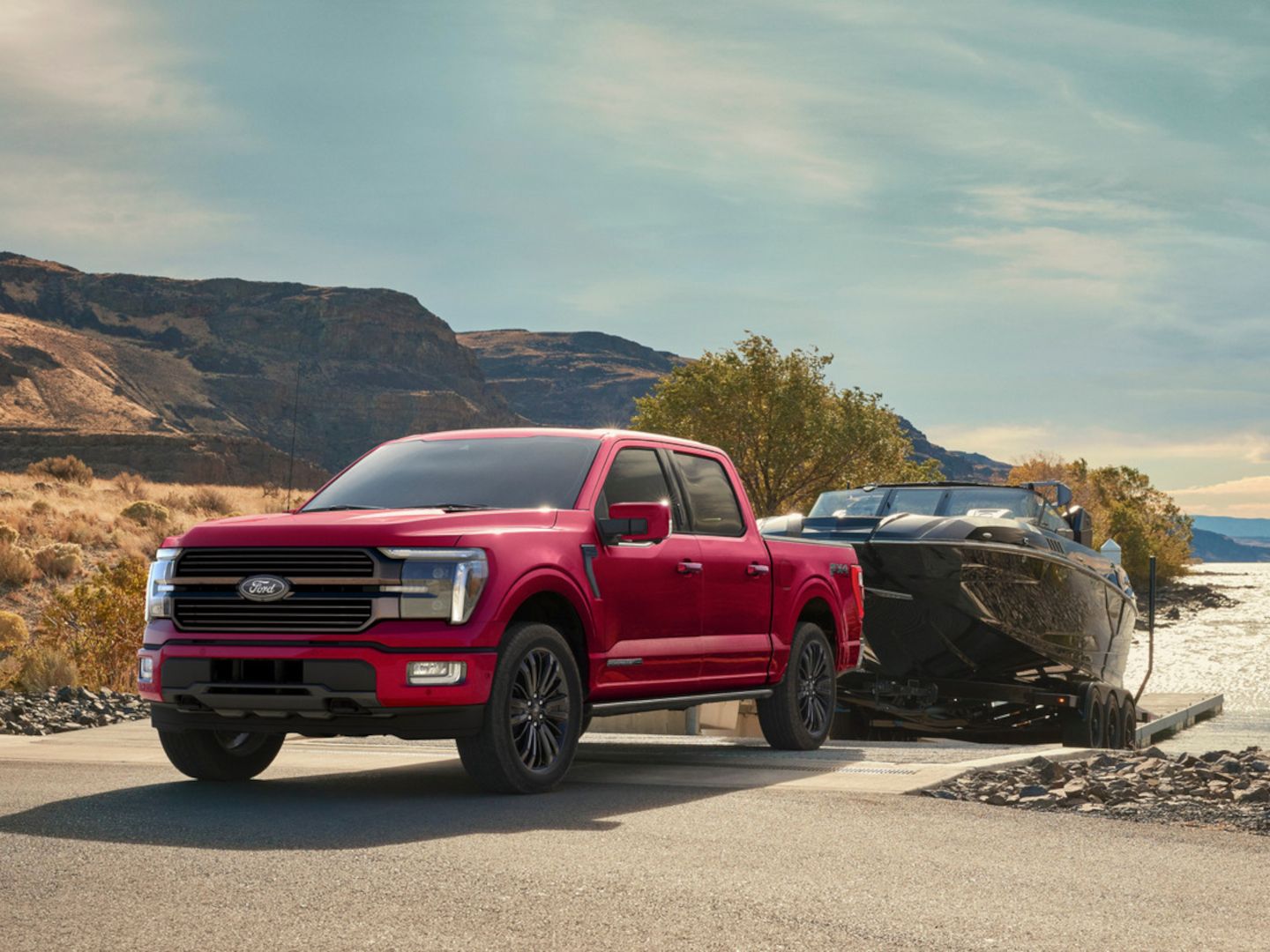
The EcoBoost V6’s 2,440 lbs (1,106.8 kg) payload rating and 13,500 lbs (6,123.5 kg) tow rating are both higher than the PowerBoost Hybrid’s 1,740 lbs (789.3 kg) and 11,600 lbs (5,261.7 kg). Both numbers reflect the extra headroom built into the conventional V6’s driveline.
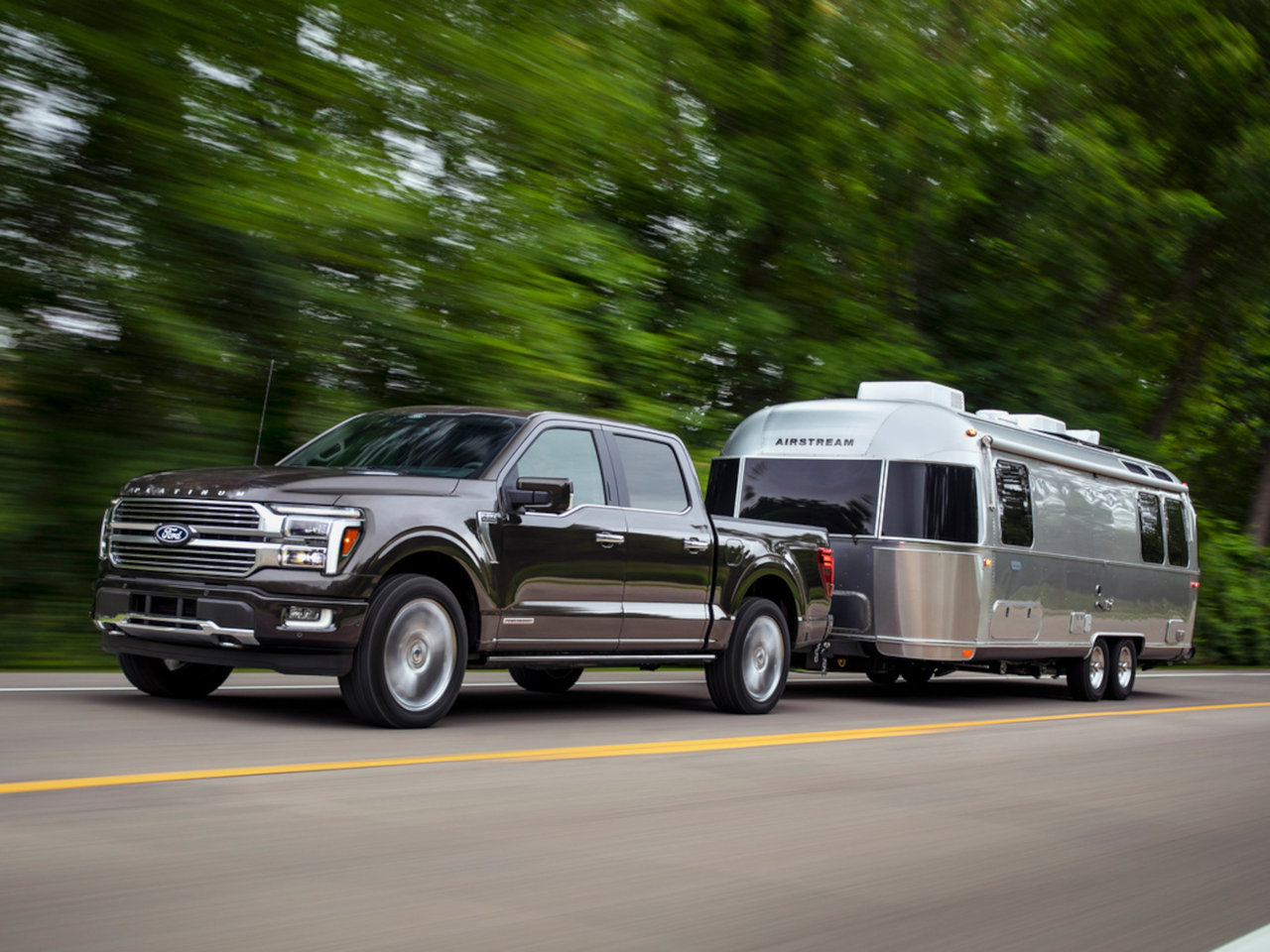
Most commute-first buyers never load anywhere near either ceiling. The PowerBoost’s own 11,600 lbs (5,261.7 kg) tow rating and 1,740 lbs (789.3 kg) payload still cover a boat, a utility trailer, or a load of building supplies, without giving up the fuel savings that make it the stronger daily driver.
Cabin Tech That Helps on Longer Drives
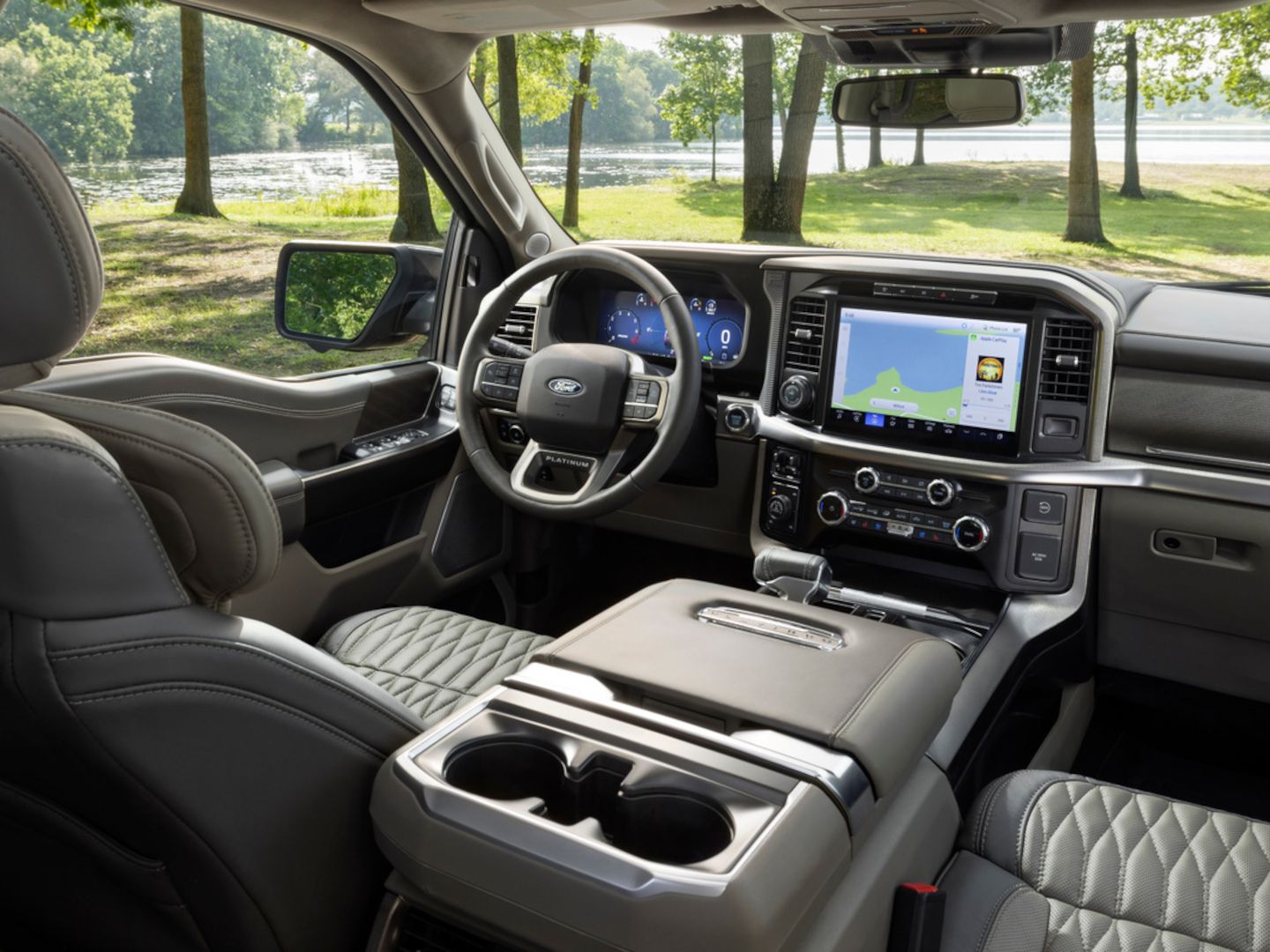
Ford Co-Pilot360 technology brings Pre-Collision Assist with automatic emergency braking, BLIS with trailer coverage, and adaptive cruise control with stop-and-go and lane centring to the F-150 lineup. Intersection Assist adds another layer of protection at busy crossings.
Available BlueCruise adds hands-free driving on mapped highways, and the available Ford Connectivity Package brings a Wi-Fi hotspot for up to 10 devices alongside the 12-inch centre display. None of this changes which engine burns less fuel, but it makes either one easier to live with on a long commute.
Why the F-150 PowerBoost Hybrid Fits British Columbia Commuters
For daily driving between home and work, the numbers point one way. The PowerBoost Hybrid’s flat 10.1 L/100km beats the EcoBoost V6 across every fuel economy category on the table, and its 570 lb-ft of torque makes stop-and-go traffic and highway on-ramps easier to manage.
The PowerBoost Hybrid fits drivers who:
- Spend most of their kilometres in city or stop-and-go traffic
- Want the lowest fuel bill without stepping down to a smaller truck
- Still want a factory tow rating that covers a trailer, boat, or ATV on weekends
The EcoBoost V6’s higher tow and payload figures reflect its heavier-duty driveline. For the everyday commute in British Columbia, the PowerBoost Hybrid’s fuel economy and low-end torque make it the engine that actually lowers cost per kilometre.
Book a Test Drive to Feel the PowerBoost Hybrid’s Torque
The 2026 F-150 PowerBoost Hybrid pairs a 3.5L V6 with an electric motor to deliver 420 hp, 570 lb-ft of torque, and a flat 10.1 L/100km rating across city and highway driving.
Visit Coastal Ford Squamish in Squamish to test drive the F-150 PowerBoost Hybrid and feel its low-end torque in stop-and-go traffic. Ask about how its fuel economy compares to the EcoBoost V6 for your daily commute.